
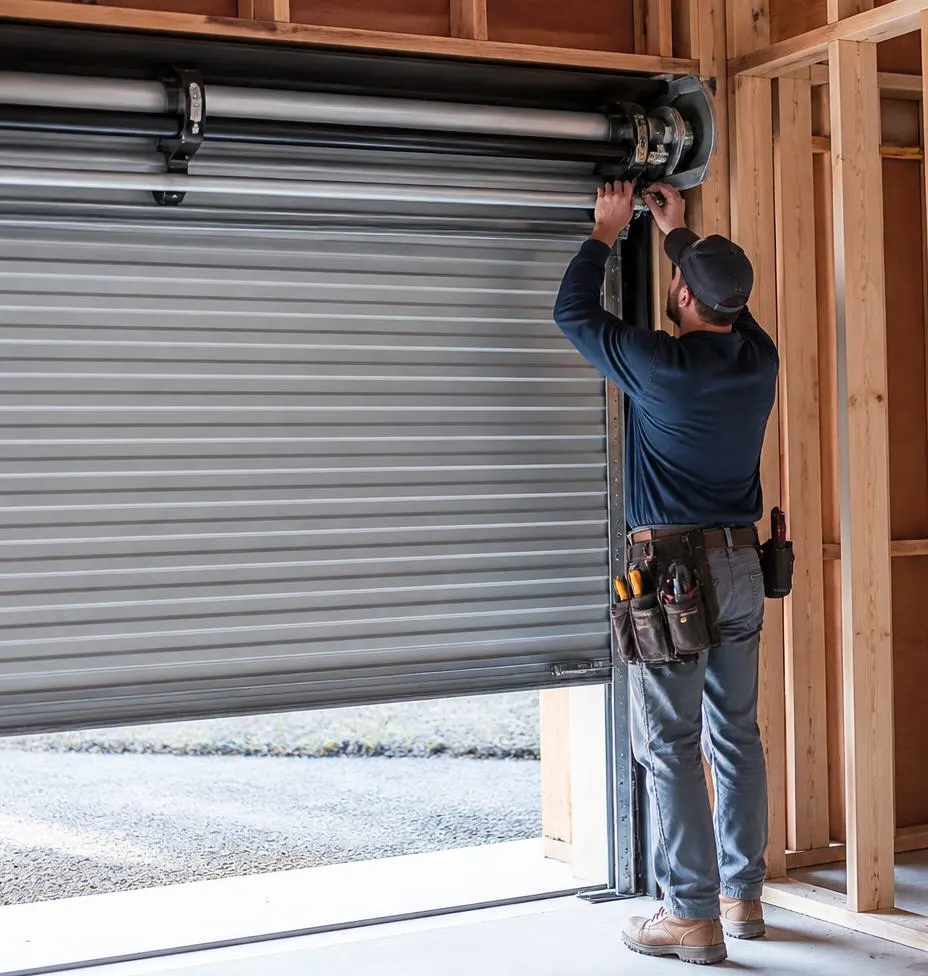
What Another Season of Waiting Actually Costs You
Skip this and the bill doesn't show up as a line item — it shows up as a bowed garage door panel, a soaked workshop, or a roof that lifted because wind got in where it shouldn't have. Augusta sits far enough inland that hurricanes rarely hit directly, but the remnants still roll through with straight-line gusts, torrential rain, and the kind of pressure swings that find every weak point in a house. A garage door that's been fine for ten years of ordinary weather can fail in one afternoon of real wind, and by the time you notice, you're dealing with water damage, a wrecked opener, or a door that won't close at all heading into winter.
Why the Garage Door Is the Weakest Wall in the House
Every other exterior wall on a typical home is a solid, braced structure. The garage door is a large panel of thin metal or composite material held in place by tracks, rollers, and a handful of hinges — it's engineered to move, not to resist pressure. When wind hits a house, it pushes on every surface, but the garage door is the one surface designed to open. Under enough sustained pressure, it can bow inward or outward, pop off its tracks, or buckle at the panel seams. Once that happens, wind gets inside the garage and pushes up on the roof from underneath, which is how garages end up contributing to roof damage that has nothing to do with the roof itself.
This matters more here than in a lot of places because of what sits around a typical Augusta-area garage: pine trees close to the structure, high humidity that keeps hardware slightly damp, and heavy rain events that saturate the ground and soften the soil anchoring fence lines and outbuildings nearby. Debris moves in wind here, and a garage door that's already a little loose on its tracks is an easy target.
Signs Your Door Won't Hold Up
- Visible daylight around the edges when the door is closed — a sign of warping or misalignment that will only get worse under wind load.
- Panels that flex or ripple when you push on them by hand. If they move easily at rest, they'll move more under 40-50 mph gusts.
- Rollers or hinges with surface rust, a common issue given the humidity here, which weakens the metal exactly where it needs to flex and hold.
- Loose or missing track bolts, often from age or from the door being bumped by a vehicle or ladder.
- A struggling opener that hesitates or reverses unexpectedly — this can mean the door is already out of balance and fighting itself before wind is even a factor.
Steps to Take Before the Next System Rolls Through
1. Check and tighten every hardware point
Go around the entire door — track brackets, hinges, roller brackets, and the opener arm connection — with a wrench and tighten anything loose. Vibration from regular use and humidity-driven rust both work bolts loose over time, and a tight door handles wind pressure far better than a rattly one.
2. Inspect and reinforce the panels
If you have an older steel door without internal bracing, retrofit wind bracing kits exist and are a reasonable middle-ground fix — they typically run in the low hundreds of dollars installed, compared to a full door replacement. If the door is already dented, cracked, or visibly thin-gauge, bracing won't fix a structural problem; replacement is the honest answer.
3. Check the weatherstripping and bottom seal
Heavy, wind-driven rain doesn't need a big gap to get in — a worn bottom seal or brittle side weatherstripping is enough to let water pool inside during a long storm. Replacing this is inexpensive and also helps with humidity and pollen intrusion the rest of the year.
4. Make sure the opener has a backup plan
Power often drops during the heavier storms that move through, especially with downed branches from nearby pines. A battery backup for the opener means you're not stuck manually wrestling a door closed in the rain, and it keeps the door from being left open and exposed if a system hits while you're not home.
5. Don't ignore the garage door track alignment
A door that's slightly off its tracks looks fine on a calm day but can come loose entirely once it's flexing under wind pressure. If the door doesn't glide smoothly or you hear scraping, get the alignment checked before storm season, not after.
When to Call Augusta Garage Door
If you've found rust on the hardware, panels that flex, or a door that's already fighting its opener, that's past the point of a DIY tighten-and-hope fix. Augusta Garage Door handles both garage door repair and full garage door installation, and for a door that's marginal, a technician can tell you honestly whether bracing and hardware repair will get you through the season or whether replacement is the safer call before the next big wind event. We also handle garage door maintenance visits that catch loose track bolts and worn seals before they turn into a storm-day emergency.
If your garage door has been making you nervous every time the wind picks up, don't wait for the next system to make the decision for you. Call Augusta Garage Door and get it checked — we serve Augusta, Evans, Martinez, North Augusta, Grovetown, Hephzibah, Aiken, and Thomson, and we'll tell you straight what your door needs before storm season tests it for you.