
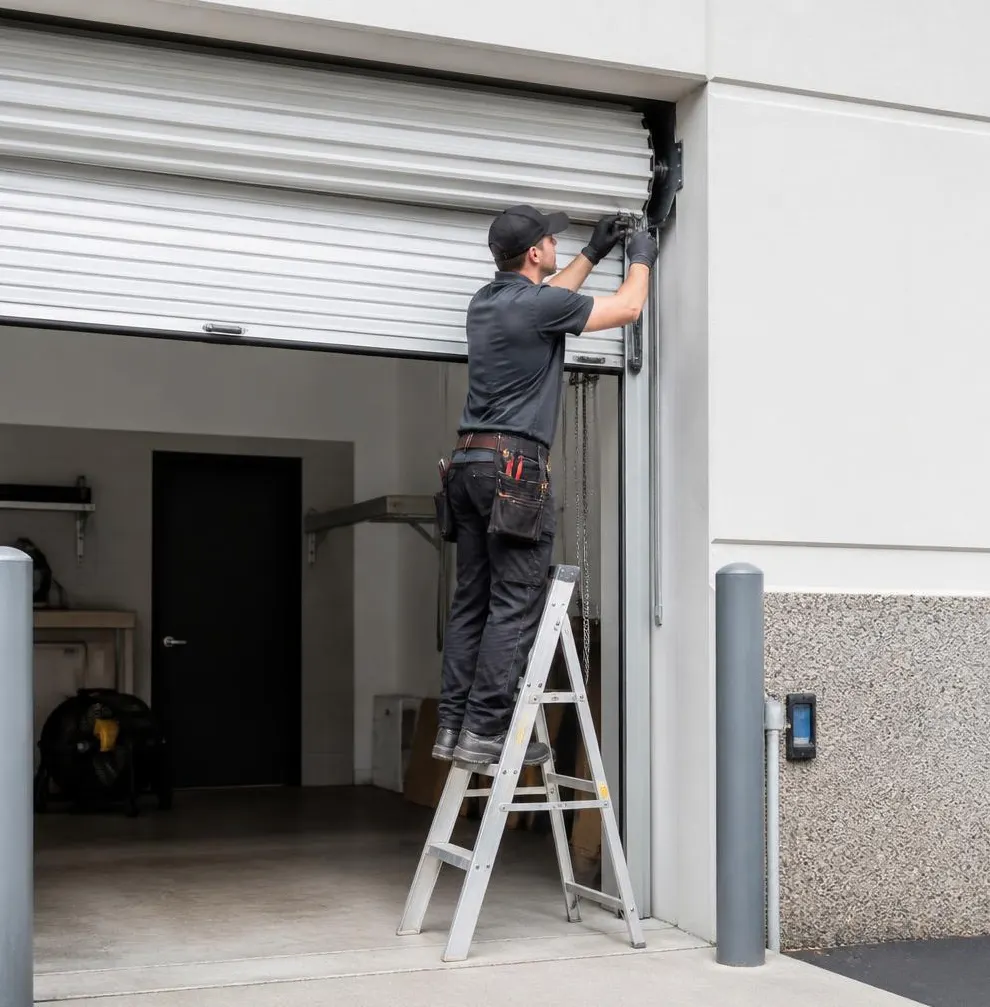
A lot of the calls we run in Evans, Martinez, and Augusta proper start the same way: 'It's just gotten louder the last few weeks.' When we get there, we usually find the same things — pine resin gummed up in the track from sap drip, a bottom bracket showing surface rust from months of humidity, or weatherstripping that's cracked and letting pollen and rainwater creep in under the door. None of it happened overnight. It built up over a season of normal use with no attention, which is exactly what a quick seasonal check is meant to catch before it turns into a stuck door or a snapped spring.
You don't need to be mechanically inclined to do this. You need about 20 minutes, a few basic tools, and the discipline to stop before you touch anything under spring tension.
Tools You'll Need
- Work gloves
- A soft brush or old toothbrush
- A damp rag and a dry rag
- Silicone-based garage door lubricant (not WD-40, which attracts grit)
- A flashlight
- A socket wrench or screwdriver for checking (not adjusting) visible bolts
The 20-Minute Routine
- Look before you touch. Stand back and visually scan the door with the flashlight — panels, tracks, rollers, cables, and springs. You're looking for rust, fraying cable strands, a bent track, or a roller that's cracked or off its rail. Don't handle the springs or cables; just look.
- Clear the tracks. Brush out pine needles, sap residue, spiderwebs, and dirt buildup inside both tracks, then wipe them down with a damp rag. This is the single biggest fix for grinding or jumping noises in homes with pine trees near the garage, which is most of them around here.
- Run the balance test. Disconnect the opener by pulling the red release cord, then lift the door halfway by hand. A properly balanced door will stay put on its own. If it slams down or shoots up, the springs are compensating incorrectly — stop here and make a note, this is a technician job.
- Lubricate the moving metal parts. Apply silicone lubricant to the hinges, roller stems, and the track-facing side of each roller. Wipe off excess so it doesn't collect grit. Skip the springs unless the manufacturer specifically says to lubricate them, and leave the opener's chain or belt alone unless your owner's manual calls for it.
- Check the weatherstripping. Run a hand along the bottom seal and the side seals. Cracked, brittle, or gapped weatherstripping lets in wind-driven rain and pollen and is an easy, inexpensive swap — but if the seal is intact, leave it, no need to replace on a schedule.
- Snug up visible hardware. Using a socket wrench, check (don't force) the bolts holding the track brackets to the frame and the hinges to the panels. Vibration from regular use works these loose over time. If a bolt spins freely with no resistance at all, note it rather than cranking it — stripped hardware needs replacing, not tightening.
- Test the auto-reverse safety feature. Place a 2x4 or a roll of paper towels flat on the ground in the door's path and close it normally. The door should reverse on contact. If it doesn't, stop using the opener until that's fixed — this is a safety issue, not a convenience one.
- Clean the photo-eye sensors. Wipe the small lenses near the bottom of each track with a soft dry cloth and make sure they're facing each other squarely. A knocked-out-of-alignment sensor is one of the most common reasons a door refuses to close.
- Run a full cycle and listen. Open and close the door completely while paying attention to sound — grinding, popping, or a scraping noise at a specific point in the cycle. Write down roughly where in the travel it happens; that detail helps a technician diagnose faster.
Where the Line Is
Everything above is safe for a homeowner because none of it involves the torsion springs, the cables under tension, or the opener's internal gearing. Those parts store enough force to cause serious injury if handled without the right tools and training. If your balance test failed, a cable looks frayed, a spring has a visible gap in its coils, or the door is off-track, stop and call a technician rather than trying to correct it yourself.
When to Call Augusta Garage Door
If your seasonal check turns up an unbalanced door, worn cables, or hardware that's stripped rather than just loose, that's a Garage Door Maintenance visit worth scheduling before it becomes a breakdown. If the springs show rust, gaps, or the door felt heavy or uneven during the lift test, that points to Spring Replacement — not a repair to attempt with hand tools. We serve homeowners throughout Augusta, Evans, Martinez, North Augusta, Grovetown, Hephzibah, Aiken, and Thomson, and we'll walk the door with you, explain what we're seeing, and only recommend what actually needs doing.
Ready for a professional once-over before winter settles in? Call Augusta Garage Door today and get it checked by a local technician who knows what this climate does to garage doors.