
Why This Can't Wait Until Spring
If you closed on a house this fall, your garage door has already been through one round of Georgia humidity and is about to meet its first hard freeze. A general home inspector typically opens the door, watches it go up and down once, and checks the box. That single pass misses the slow damage that heavy rain, pollen buildup, and pine debris cause over years — damage that tends to fail all at once during an ice storm or a hurricane remnant pushing wind and water inland. Wait until spring to look closer and you risk a stuck door the morning you need to leave for work, a spring that snaps in freezing temperatures, or water damage that's crept far enough into the framing to need more than a patch. None of this is expensive to check now. It can be very expensive to ignore.
Walk Your Garage With This Checklist
1. Springs: Rust, Gaps, and Winding Cones
Look at the torsion spring (usually mounted horizontally above the door) or the extension springs along the upper tracks. Surface rust is common in humid climates, but flaking rust, visible gaps between coils when the door is down, or a spring that looks stretched compared to its neighbor are signs of a spring near the end of its life. A failed spring under load can let the door slam down hard enough to damage the floor, a car, or a person reaching to close it.
2. Bottom Panel and Weatherstripping
Crouch down and check the bottom few inches of the door and the rubber seal beneath it. Soft spots, bubbling paint, or a seal that's cracked and pulling away from the track are classic signs of standing water and pine needle buildup doing slow damage. A failed seal lets rain blow in during storms and gives pests an easy entry point. This is the panel that takes the worst of Augusta's rainy season, so it often fails years before the rest of the door.
3. Tracks and Rollers
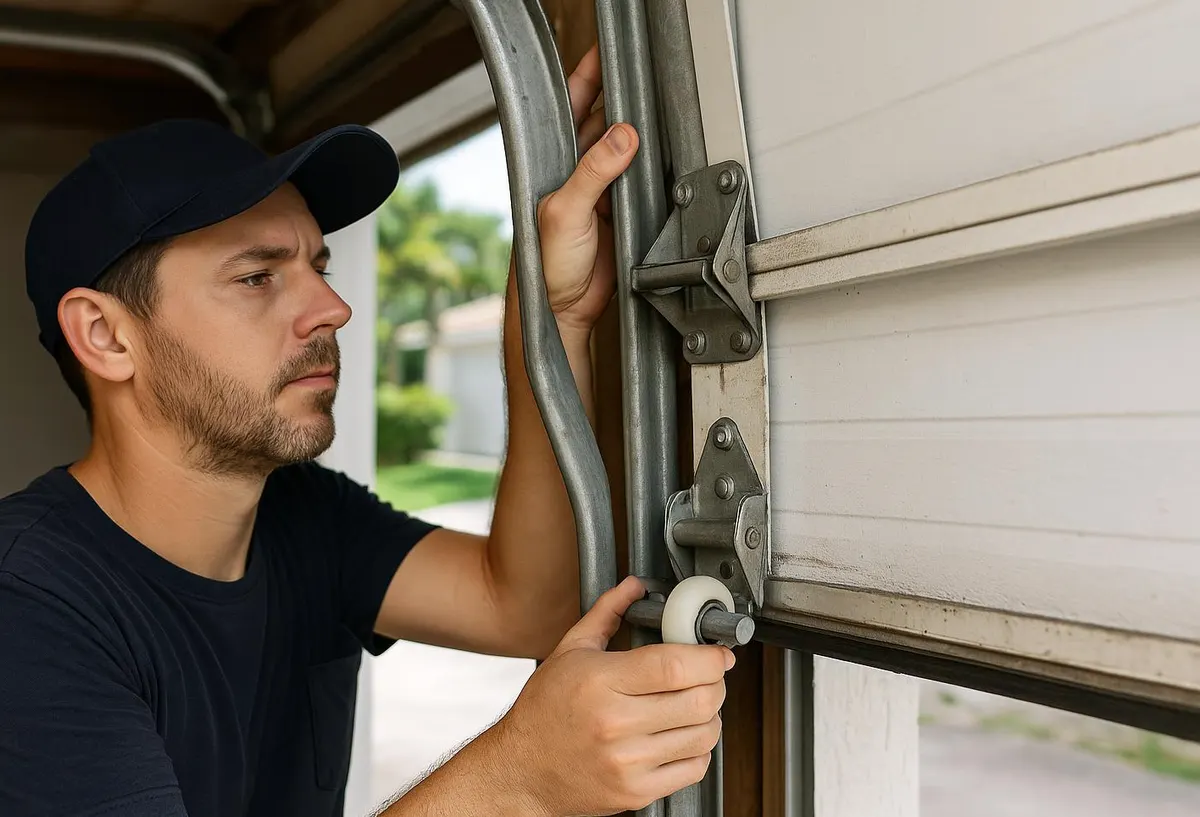
Run your hand along the vertical and horizontal tracks. They should be free of major rust, dents, or gaps where they bolt to the frame. Rollers should turn smoothly with no flat spots or visible metal shavings underneath. A bent track usually means the door was forced shut at some point or struck by a vehicle — cosmetic from the outside, but it causes uneven wear that gets worse every month.
4. Cables
Look at the cables running alongside the springs down to the bottom brackets. Any fraying, kinking, or visible broken strands is a near-term failure risk, not a someday problem. A snapped cable under tension can whip hard enough to damage nearby items or injure someone standing close.
5. Opener Age, Force Settings, and Battery Backup
Check the opener's manufacture date on its label if you can find it. Units older than 10-15 years often lack modern safety reversal sensors and rolling-code security, and parts get harder to source. Test the auto-reverse: place a 2x4 flat on the ground where the door closes. It should reverse on contact every time. Also check whether there's a battery backup — without one, a power outage during a storm means you're opening the door by hand, which is awkward if you don't know the manual release is there.
6. Photo Eye Sensors
The two small sensors near the floor on each side of the track should be clean, properly aligned, and lit solid (not blinking) when the system is idle. Pollen film and spiderwebs build up on these fast in this climate and can cause the door to refuse to close, or worse, fail to detect an obstruction.
7. Balance Test
Disconnect the opener (pull the release cord) and lift the door halfway by hand. It should stay in place on its own. If it drifts down or shoots up, the spring tension is off, which puts extra strain on the opener motor and shortens its life significantly.
8. Slab and Frame at the Door Opening
Look at the concrete slab and the wood or metal framing around the opening for cracking, gaps, or soft spots. Foundation settling shows up here first in a lot of older homes, and any gap is a direct path for water and insects.
When to Call Augusta Garage Door
If you find rust on the springs, a drifting balance test, or a soft bottom panel, don't wait for it to get worse. Augusta Garage Door can run a full inspection, handle Spring Replacement before cold weather makes the metal more brittle, and set you up with a Garage Door Maintenance plan so these issues get caught twice a year instead of once at closing.
New to your home or just haven't had the door looked at in a while? Call Augusta Garage Door for an honest inspection anywhere from Augusta to Evans, Martinez, North Augusta, Grovetown, Hephzibah, Aiken, or Thomson.